First frame
One approved image anchors the opening composition.
Frame 01 → motion → landing frame
Start from an approved image, describe only the motion, choose the route and cost ceiling, then track one normalized video job.
{
  "mode": "image_to_video",
  "image_url": "https://cdn.app/frame.webp",
  "prompt": "The subject turns toward camera...",
  "duration_seconds": 5,
  "audio": "optional",
  "route": "cheapest_compatible",
  "max_cost_usd": 0.25
}
Four input modes
The route must support the input combination. Do not silently drop a last frame, reference, or audio file.
One approved image anchors the opening composition.
Two approved images define both ends of the move.
Extra media guides identity, object, style, or motion.
A supported audio file can guide timing and performance.
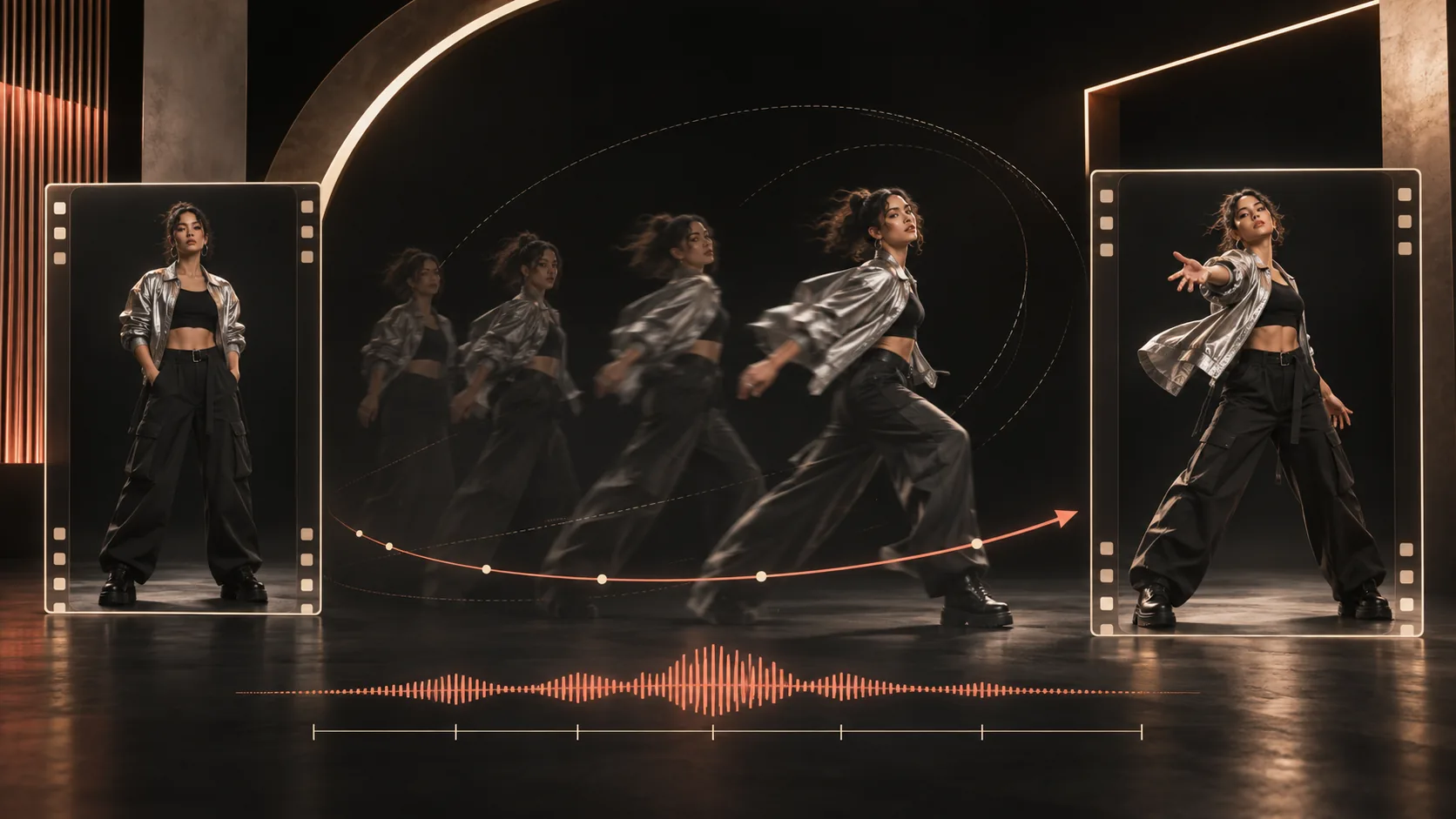
Image-to-video route prices
Compare the same input, duration, resolution, and audio setting. Count every rerun when pricing one approved clip.
| Route | From | 5 seconds | Use |
|---|---|---|---|
| Wan 3 | $0.025/s | $0.125 | Lowest listed start |
| MiniMax H3 | $0.029/s | $0.145 | Reference-led low-cost route |
| Kling 3 | $0.039/s | $0.195 | Controlled image motion |
| Veo 3.1 Fast | $0.049/s | $0.245 | Listed native-audio route |
| Seedance 2.5 | $0.069/s | $0.345 | Higher-cost review route |
Before the queue
Fetch the image before submission.
Check MIME type, bytes, and dimensions.
Match the target video placement.
Leave space for subject and camera movement.
Require every requested input mode.
Stop above the maximum cost.
Image-to-video questions
An image-to-video API lets software send a source image, motion prompt, and output settings, create an asynchronous video job, track status, and receive an animated result without using a visual editor.
Read the full answer →Product shots, character frames, portraits, concept art, environments, illustrations, campaign stills, and generated images can work when they meet the selected route's format, size, resolution, and aspect-ratio rules.
Read the full answer →Keep the opening image facts, then write the subject motion, scene reactions, one camera path, timing, sound, and final frame. Put duration, resolution, model, and budget in API fields.
Read the full answer →It uses the image as a strong opening anchor, but motion generation can still change faces, hands, labels, shapes, lighting, or background details. Good source preparation and route testing reduce drift.
Read the full answer →The listed Cre8vid starting rates run from $0.025 to $0.069 per generated second, or $0.125 to $0.345 for a five-second attempt before retries. Exact price depends on route and settings.
Read the full answer →Direct the motion
Primary sources